
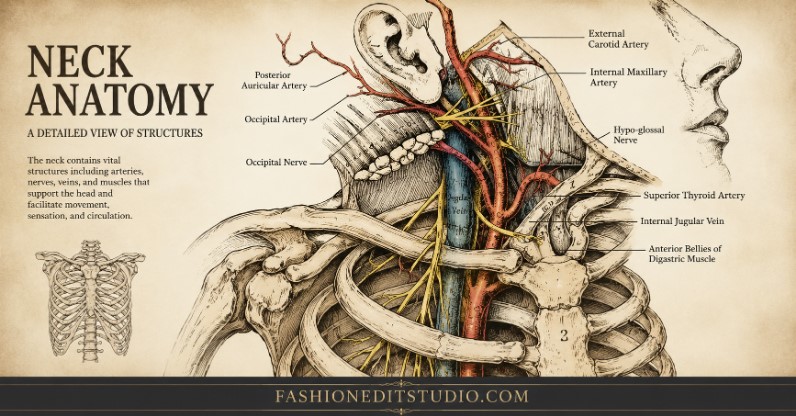
Imagine trying to perform a complex surgical procedure, understand a newly engineered vaccine, or explain a rare cardiovascular condition to an anxious family using only a block of textbook text. It would be nearly impossible. Medical science is beautifully intricate, but its complexity can also form a challenging barrier to clear understanding.
This is where medical illustrations become indispensable. Operating at the unique intersection of advanced clinical science and precise visual art, these specialized visuals translate abstract biological phenomena into clear, accurate narratives.
With recent shifts in search trends—including Google’s landmark May 2026 Core Update and the widespread integration of AI Search Overviews—the demand for highly reliable, expertly crafted clinical content is at an all-time high. Medical communication relies on absolute accuracy. Let’s explore how modern visual medical media is evolving, its real-world impact on healthcare, and why human expertise remains irreplaceable.
What Are Medical Illustrations and Clinical Visuals?
A medical illustration is a specialized visual work that interprets and maps complex anatomical, biological, or surgical information. Unlike generic stock photography or purely decorative graphics, these visuals are built from the ground up to achieve strict clinical accuracy and serve clear educational goals.
Also Read: Marzia Kjellberg From YouTube Star to Creative Icon
The field is driven by certified medical illustrators—professionals who hold advanced degrees combining master’s level medical training (such as human gross anatomy, pathology, and embryology) with rigorous training in digital media, 3D modeling, and communication theory. They serve as vital translators, taking multi-layered scientific discoveries and distilling them into visual media that diverse audiences can quickly understand.
The Core Applications Across Healthcare
Visual medical assets are crucial infrastructure across the entire lifespan of healthcare education, research, and delivery.
- Medical and Surgical Education: Medical students, residents, and practicing surgeons rely heavily on illustrated atlases, surgical step-by-step guides, and interactive 3D structures. These assets map out spatial relationships between nerves, blood vessels, and tissues that might be obscured in standard photographic records.
- Patient Education and Health Literacy: Medical terminology can easily confuse or overwhelm patients. A clear, empathetic graphic explaining a disease pathway or showing what to expect during a surgical procedure helps reduce patient anxiety, enhances informed consent, and improves adherence to post-treatment plans.
- Pharmaceutical and Biotech R&D: When biotech firms develop novel therapeutics, explaining a drug’s mechanism of action (MoA) at the molecular level requires deep visualization. Illustrators build the graphics and animations that show exactly how a compound interacts with specific cellular receptors.
- Legal Graphics in Medical Litigation: In legal disputes involving personal injury or medical malpractice, highly accurate, custom visual displays are used to clarify intricate anatomical facts for judges and juries.
Technical Modalities: From Charcoal to the Metaverse
As digital technology has evolved, the methods used in biocommunication have expanded dramatically. While classical training still emphasizes foundational pencil and ink drawing, modern workflows leverage cutting-edge technical suites.
| Visual Modality | Key Technologies Used | Primary Medical Use Case |
| 2D Digital Vector & Raster | Adobe Illustrator, Photoshop | Editorial journals, medical textbooks, patient handouts |
| 3D Modeling & Rendering | Pixologic ZBrush, Autodesk Maya, Blender | Interactive anatomical models, complex cellular environments |
| Biomedical Animation | After Effects, Cinema 4D | Molecular mechanisms of action (MoA), surgical workflow walkthroughs |
| Immersive Media (AR/VR) | Unity, Unreal Engine | Virtual reality surgical training suites, spatial anatomical exploration |
The Intersection of Medical Illustration and AI Search In 2026
The integration of advanced generative AI search frameworks in mid-2026 has completely changed how users seek out and consume online health information. When users search for physiological pathways or pathological changes, search engines prioritize content that demonstrates true expertise, authoritative sourcing, and deep educational clarity.
Generic, AI-generated imagery often falls short here because it frequently introduces anatomical distortions—such as incorrect counts of blood vessel branchings or skewed spatial proportions. True authority rests on human-curated visual content that aligns perfectly with peer-reviewed medical text. Providing clear, verified medical graphics along with descriptive metadata, structured text, and direct citations is key to satisfying modern search engines and building deep trust with readers.
Conclusion
Medical illustrations are much more than mere technical drawings; they are vital tools for clarity, education, and patient safety. By transforming complex scientific details into clear, compelling visual narratives, they empower medical students to learn faster, help researchers explain groundbreaking discoveries, and give patients the clarity they need to make informed healthcare choices. As digital landscapes and search technologies continue to advance, the seamless integration of artistic precision and strict clinical accuracy remains essential for world-class medical communication.
FAQs
What is the difference between a medical illustration and a medical photograph?
Unlike cluttered medical photography, a medical illustration removes blood and fluid to isolate the exact anatomical structures and pathways needed for learning.
How do you become a certified medical illustrator?
Aspiring illustrators typically complete a selective, accredited graduate-level program in medical illustration. Their coursework includes rigorous graduate medical studies alongside advanced training in digital media, visual storytelling, and 3D modeling. Certification is managed through the Board of Certification of Medical Illustrators (BCMI).
Can artificial intelligence replace medical illustrators?
While AI tools excel at rapid prototyping, they struggle with strict anatomical accuracy, scientific nuance, and complex clinical data. Professional illustrators use AI to speed up workflows, but human expertise remains vital for true scientific accuracy and oversight.
Who hires medical illustrators?
They work in hospitals, research labs, pharma agencies, medical device companies, law firms, and educational publishers.
Keep in the loop! Visit Fashion Edit Studio for updates.